

 See My Latest Article on HelloNation
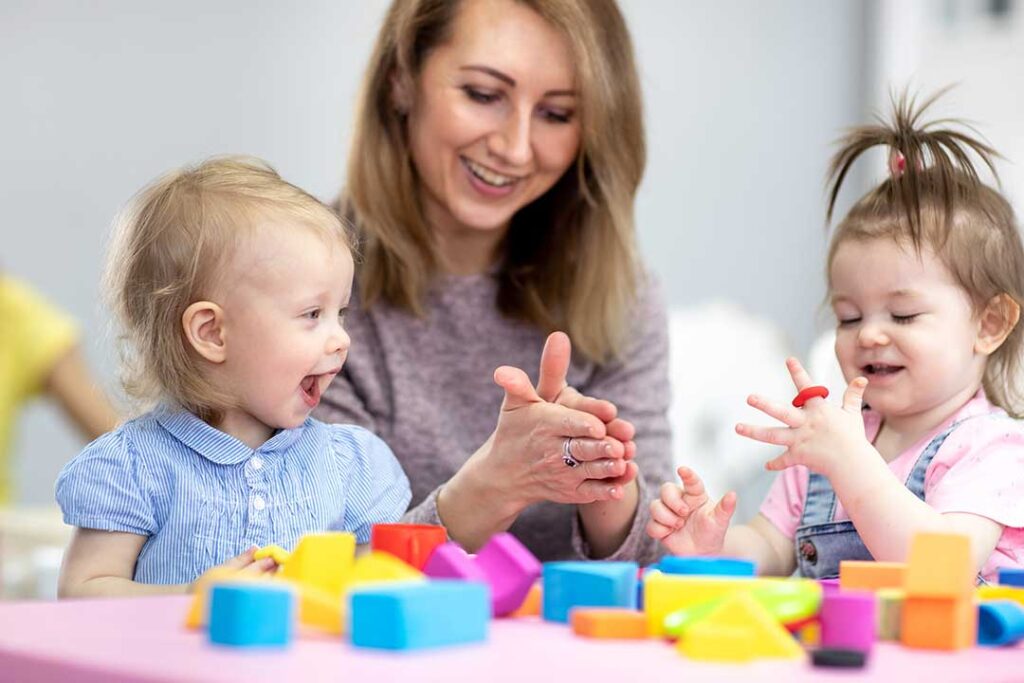
What is structured play?
Structured play is play with a clear purpose, simple instructions, or an organized sequence. An adult may set up the activity, explain how it works, and offer support while children practice a skill such as sorting, counting, listening, moving, drawing, or taking turns.
Structured play is different from free play, where children choose the materials, rules, and direction. Both forms of play are valuable. Structured activities give early learners opportunities to build specific skills, while free play supports creativity, independence, and flexible thinking.
For young children, structured play should still feel enjoyable rather than like formal schoolwork. The activity may last only five to fifteen minutes and can be adjusted based on the child’s age, attention span, interests, and energy level.
Why does structured play matter in early childhood?
Structured play helps children learn through active participation. Instead of only hearing an explanation, children handle objects, move their bodies, make choices, and receive immediate feedback.
Well-designed activities can support:
- Language development through conversation, naming, describing, and following directions
- Early math skills through counting, matching, sorting, comparing, and recognizing patterns
- Physical development through grasping, stacking, balancing, jumping, and coordinating movements
- Social-emotional growth through turn-taking, cooperation, patience, and managing frustration
- Executive function through remembering steps, shifting attention, and completing a task
- Confidence through manageable challenges and opportunities to try again
The adult’s role is not to control every moment. It is to create a supportive structure and allow the child to do as much of the thinking and acting as possible.
How is structured play different from ordinary instruction?
Structured play uses learning goals, but it does not need worksheets, lengthy explanations, or constant correction. The child remains physically and mentally involved.
For example, an adult might say, “Can you find three objects that are round?” The child searches, chooses items, counts them, and explains the answer. This combines movement, language, shape recognition, and number concepts in a brief activity.
Traditional instruction might focus on showing the child the correct answer. Structured play focuses more on helping the child explore a concept through action.
A useful activity usually includes:
- A clear but simple goal
- Materials that are safe and easy to handle
- One or two directions at a time
- Room for the child to make choices
- Encouragement without pressure to perform perfectly
What are good examples for infants and toddlers?
For infants, structured play may involve short, repeated interactions with an attentive adult. Simple activities include copying facial expressions, reaching for a soft object, looking for a partially hidden toy, or listening for changes in sound.
Toddlers can manage brief activities with one or two steps. Examples include:
- Placing large objects into containers
- Matching socks, lids, or picture cards
- Following movement instructions such as “touch your head” or “stomp twice”
- Finding objects by color, size, or texture
- Helping place toys into categories
- Building a short block tower and counting the blocks
- Looking at a picture book and answering simple questions
The activity should end before the child becomes overwhelmed. Toddlers often learn more from repeating a familiar game than from moving quickly to a new one.
What works well for preschoolers?
Preschool children can often follow a sequence, explain their thinking, and participate in simple group games. Structured play can become more open-ended while still having a clear learning focus.
Examples include creating a pattern with blocks or beads, acting out a story, completing a scavenger hunt for shapes, or playing a board game with very simple rules. Children can also practice early problem-solving by building a bridge for toy animals, designing a pretend grocery list, or arranging picture cards in story order.
Adults can extend the learning by asking questions such as:
- “What do you think will happen next?”
- “How could you make the tower stronger?”
- “What is different about these two objects?”
- “Can you show another way to solve it?”
- “How did you decide where that piece belongs?”
Questions should invite thinking rather than require a single correct response.
How can families use structured play at home?
Structured play does not require a dedicated playroom or expensive materials. Many activities can be built around household objects, books, movement, and ordinary routines.
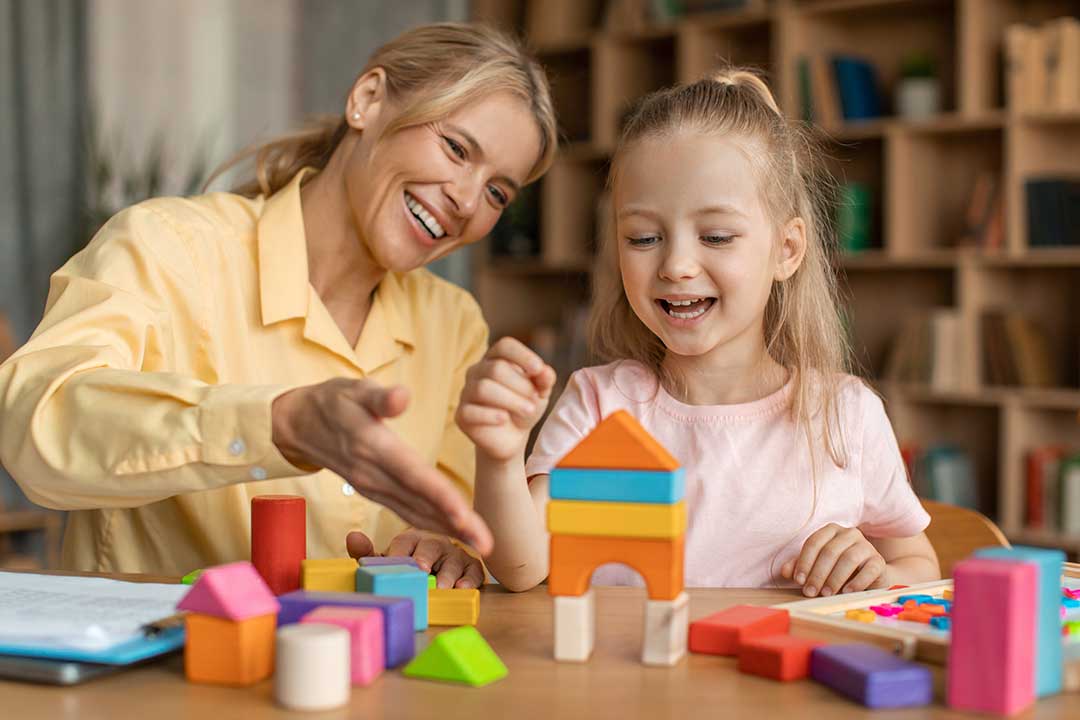
A family might sort clean laundry by color, count steps while walking indoors, compare the sizes of cooking utensils, or create a short indoor obstacle course using pillows and open floor space. During colder or rainy periods, these activities can provide purposeful movement when outdoor time is limited.
At other times of year, structured play can take place outside through sidewalk shape hunts, counting natural objects, simple ball games, or movement challenges. Outdoor activities should be adapted to weather conditions, surfaces, supervision needs, and the child’s ability.
A practical setup often includes:
- A defined play area with enough room to move safely
- A small number of materials to prevent distraction
- A beginning, middle, and ending
- A predictable cleanup routine
- Flexibility if the activity needs to change
Children do not need perfectly arranged materials. Clear expectations and an interested adult are usually more valuable than elaborate preparation.
How long should structured play last?
The right length depends on the child and the activity. Infants may participate for only a few minutes at a time. Toddlers may stay engaged for five to ten minutes, while preschoolers may continue for ten to twenty minutes if the activity is active and meaningful.
Signs that the activity may be too long include repeated wandering away, throwing materials, arguing about every step, or becoming unusually upset. These behaviors do not always mean a child is unwilling to learn. The activity may need a shorter duration, fewer directions, easier materials, or a movement break.
Repeating an activity on different days can be useful. Familiarity allows children to focus less on understanding the rules and more on practicing the underlying skill.
What are common mistakes adults make?
Structured play can lose its value when adults direct every action or correct every response. Children need opportunities to make decisions, make small mistakes, and discover solutions.
Common problems include:
- Giving too many instructions at once
- Expecting a child to sit still for too long
- Choosing an activity that is far above the child’s current ability
- Treating mistakes as failures
- Focusing on a finished product instead of the process
- Comparing one child’s performance with another’s
- Continuing after the child has clearly lost interest
A better approach is to simplify the task, demonstrate one step, and then pause. Specific encouragement is more useful than general praise. Saying, “You kept trying different pieces until one fit,” describes the child’s effort and strategy.
How can structured play support children with different needs?
Structured play should be adjusted rather than treated as a fixed program. Some children need visual examples, repeated directions, extra movement, larger materials, more time, or fewer choices.
An adult can offer two options instead of an open-ended question, use gestures along with spoken directions, or break a multi-step activity into smaller parts. A child who finds group play difficult may begin with a one-on-one version before joining several children.
The goal is participation and growth, not identical performance. If a child consistently struggles with communication, movement, attention, hearing, vision, or social interaction, families can discuss observations with the child’s pediatric healthcare provider or an appropriately qualified early childhood professional.
What should caregivers remember?
Structured play works best when it is brief, active, developmentally appropriate, and enjoyable. It should complement free play, daily routines, rest, outdoor activity, and warm adult-child conversation.
For families in Carmel, seasonal changes and busy household schedules may make short, flexible activities especially practical. A ten-minute sorting game, movement challenge, or story sequence can fit naturally into the day without turning home life into a classroom.
The most useful question is not whether an activity looks educational. It is whether the child is engaged, safe, practicing a meaningful skill, and given enough freedom to think and participate.