

 See My Latest Article on HelloNation
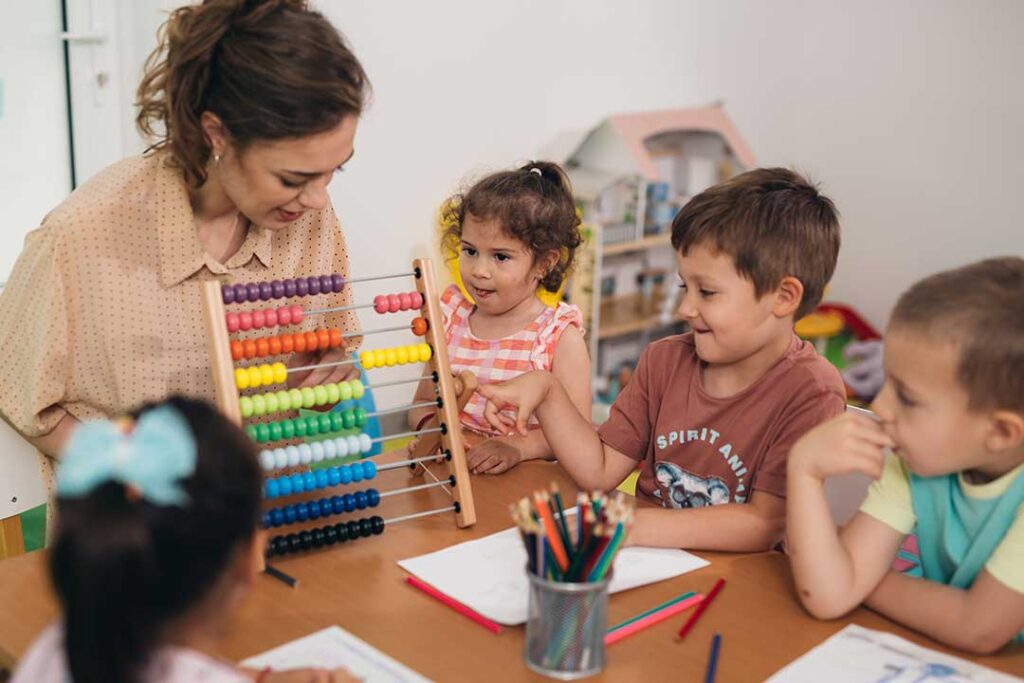
What are Indiana’s Early Learning Foundations?
Indiana’s Early Learning Foundations are developmental guidelines that help caregivers plan experiences for children from birth through kindergarten entry. The current Indiana Early Learning Standards were revised in 2023 and align with Indiana’s broader academic standards.
These standards are not a checklist that requires every child to master the same skill at the same time. They describe developmental progress and provide shared language for educators, caregivers, and families. Activities should match a child’s age, interests, abilities, language background, and current level of development.
The standards address connected areas of growth, including:
- Language and communication
- Cognitive development
- Social and emotional growth
- Approaches to play and learning
- Motor development
- Physical health and growth
- Early literacy, mathematics, science, social studies, and creative arts
A single activity may support several areas at once. For example, preparing a snack can involve communication, counting, fine-motor coordination, health routines, cooperation, and problem-solving.
How should caregivers use the standards when planning activities?
Start with the developmental goal, then choose an activity that gives children a natural reason to practice that skill. The activity should feel like play, exploration, conversation, movement, or participation in daily routines rather than a formal worksheet exercise.
A practical planning process includes four steps:
1. Identify a skill.
Choose one specific goal, such as recognizing patterns, using descriptive words, taking turns, or coordinating small hand movements.
2. Select an open-ended activity.
Use materials that allow more than one correct answer. Blocks, paper, water, natural objects, pretend-play materials, books, and household items can all support learning.
3. Add intentional questions or prompts.
Ask children to explain, predict, compare, describe, or demonstrate. Avoid taking over the activity or expecting a particular finished product.
4. Observe and adjust.
Notice what the child can do independently, what requires support, and what the child tries next. Use that information to plan a more suitable challenge.
The goal is not to label an activity as “math” or “language” and move on. The goal is to understand what children are learning through the experience and how adult guidance can extend that learning.
Which activities support language and early literacy?
Language develops through frequent, responsive conversation. Children benefit from hearing rich vocabulary and having time to express ideas, ask questions, and tell stories.
Useful activities include:
- Reading the same favorite book more than once and inviting children to predict what happens next
- Talking about pictures, characters, settings, and feelings
- Making up stories with toy animals, blocks, dolls, or household objects
- Singing songs, reciting rhymes, and clapping syllables
- Creating shopping lists, signs, pretend menus, or labels during dramatic play
- Retelling a familiar event in sequence, such as getting ready to go outside
Adults can expand children’s language without correcting every mistake. If a child says, “Dog run,” an adult might respond, “Yes, the brown dog is running across the yard.” This provides a useful model while keeping the conversation positive.
For children who hear more than one language, families can use all of the languages spoken at home. Strong development in a home language supports communication, identity, and later learning.
How can everyday play build early math and science skills?
Young children develop mathematical and scientific thinking by handling objects, noticing changes, comparing quantities, and testing ideas. Activities do not need specialized equipment.
Try incorporating questions such as:
- “Which tower is taller?”
- “How many cups will fill this container?”
- “What do you think will happen if we add water?”
- “How could we make these groups equal?”
- “What changed after the ice melted?”
- “Can you find another object with the same shape?”
At home or in a childcare setting, children can sort laundry by color, count utensils for a meal, compare the sizes of leaves, measure ingredients, arrange objects in patterns, or build bridges with blocks.
Outdoor experiences are especially useful in Carmel, IN, where seasonal changes provide regular opportunities to observe weather, plants, soil, light, and animal activity. On cold or rainy days, the same investigations can continue indoors with ice cubes, water in sealed containers, natural objects, or simple construction materials.
What activities strengthen social-emotional development?
Social-emotional learning is built into routines, relationships, and play. Children learn to identify feelings, manage frustration, solve social problems, and participate in a group through repeated practice.
Helpful activities include:
- Using books or puppets to discuss how characters feel
- Practicing turn-taking with board games, rolling games, or shared materials
- Creating a quiet area where children can calm their bodies
- Acting out common problems, such as two children wanting the same toy
- Giving children small responsibilities, such as setting nap items or organizing materials
- Naming emotions and discussing safe ways to express them
Adults can describe the steps of problem-solving: identify the problem, listen to each person, think of possible solutions, and try one. Children may need substantial adult assistance at first. Independence develops gradually through predictable support, not through being expected to manage every conflict alone.
How do movement and health routines connect to the standards?
Physical development includes both large-muscle movement and small-muscle coordination. Children need opportunities to run, climb, balance, carry, push, pull, draw, build, pour, and manipulate objects.
Indoor activities may include obstacle paths made from safe furniture placement, dancing, animal walks, beanbag tossing, or balancing along a line. Fine-motor activities can include play dough, large beads, tongs, puzzles, tearing paper, or using crayons and child-safe scissors with supervision.
Health routines also offer learning opportunities. Washing hands, putting on coats, drinking water, brushing teeth, and serving food can support sequencing, self-help skills, vocabulary, body awareness, and responsibility.
Seasonal planning should account for Indiana weather. Outdoor time may require layers, sun protection, water access, or shorter activity periods during heat, cold, rain, or icy conditions. Safe movement matters more than completing a particular outdoor lesson.
How can caregivers tell whether an activity is aligned?
An activity is more likely to be aligned when it has a clear developmental purpose, invites active participation, and allows the child to show learning in different ways.
Ask:
- What is the child practicing?
- Can the child make choices or contribute ideas?
- Is the level of challenge appropriate?
- Can the activity be adapted for different abilities or communication styles?
- What will the adult observe?
- What might be changed next time?
Alignment does not require a formal lesson plan for every moment. Building with blocks, helping prepare lunch, looking for signs of spring, or comforting a friend can all support Indiana’s early learning expectations when adults recognize the skills involved.
What are common misconceptions about early learning standards?
The standards do not require young children to sit still for long periods, complete identical crafts, or memorize skills before they are developmentally ready. They also do not replace relationships, play, rest, movement, or child choice.
Another misconception is that an activity must address only one domain. Early learning is interconnected. A child drawing a map of a pretend neighborhood may be developing fine-motor control, spatial reasoning, language, social understanding, and creative expression at the same time.
Observation is more useful than pressure. Children develop at different rates, and meaningful progress may appear in conversation, pretend play, routines, or repeated attempts before it appears in a finished product.
How can families and childcare educators share useful information?
Brief, specific observations are more helpful than general statements. Instead of saying that a child “did well,” an adult might note that the child counted five objects accurately, asked a peer for a turn, described a change in the weather, or used a new word during play.
Sharing children’s interests, home routines, languages, and successful calming strategies can help adults plan more responsive experiences. Families in the community can also use ordinary household routines as opportunities for conversation, movement, independence, and problem-solving.
The most effective alignment is flexible. Indiana’s standards provide direction, while children’s curiosity, development, relationships, and daily experiences determine how learning takes shape.