

 See My Latest Article on HelloNation

Confidence in preschool-aged children grows through repeated experiences of safety, belonging, practice, and manageable independence. Children do not need constant praise or adult protection to become confident; they need dependable relationships and opportunities to try, make mistakes, solve problems, and experience progress.
For families and childcare educators in Carmel, IN, confidence-building often happens during ordinary routines: getting dressed, joining group play, cleaning up, speaking to another child, or trying an unfamiliar activity. These moments provide useful practice for emotional and social development.
What does confidence look like in a preschooler?
Preschool confidence does not always mean being outgoing or speaking often. A confident child may be quiet, cautious, energetic, imaginative, or slow to warm up. The more useful question is whether the child feels capable of participating and recovering from ordinary setbacks.
Signs of developing confidence may include:
- Trying a task before asking an adult to take over
- Expressing preferences with words or gestures
- Joining play after observing for a while
- Asking questions or requesting help
- Recovering after a mistake or disappointment
- Showing pride in effort, creativity, or improvement
- Tolerating brief separation from a familiar adult
- Beginning to solve small conflicts with support
A child who refuses a new activity is not necessarily lacking confidence. Preschoolers often need time to observe before participating. Temperament, fatigue, hunger, sensory needs, previous experiences, and changes at home can all affect how willing a child feels in a particular moment.
How can adults build confidence without pressuring children?
The most effective support combines encouragement with realistic expectations. Children benefit from knowing that adults believe they can try, while also knowing they will not be shamed if the task feels difficult.
Instead of saying, “You can do anything,” use specific language connected to the child’s actions:
- “You kept working even when the pieces did not fit.”
- “You looked at the other children before deciding to join.”
- “You used words to tell your friend what you needed.”
- “You tried a new way after the first idea did not work.”
Specific feedback helps children understand what they did well. General praise, such as “You are so smart,” may feel pleasant but does not teach a child which behaviors to repeat. Comments focused on effort, planning, persistence, kindness, and problem-solving are more useful.
Adults should also avoid turning every attempt into a performance. A child who draws, builds, sings, or tells a story does not always need evaluation. Sometimes a simple observation—“You used many lines and circles in your drawing”—allows the child to enjoy the activity without feeling tested.
Why is appropriate independence important?
Preschoolers develop confidence when they have meaningful responsibilities that match their abilities. Independence should not mean leaving children to manage problems alone. It means giving them a reasonable role in completing everyday tasks.
At home or in childcare, children may be able to:
- Choose between two clothing options
- Put toys into designated containers
- Carry a small cup or napkin to the table
- Wash hands with reminders
- Place belongings in a regular location
- Help prepare a simple snack
- Decide whether to begin with drawing, blocks, books, or another available activity
Offering limited choices can prevent overwhelm. “Do you want the blue cup or the green cup?” is usually more manageable than “What do you want?” Clear routines also help children feel capable because they know what will happen next.
Adults should pause before stepping in. If a child is struggling with a zipper, puzzle, or social interaction, wait briefly and observe. A small prompt may be enough: “What could you try next?” Taking over too quickly can unintentionally communicate that the child is not capable.
How should adults respond to mistakes?
Mistakes are a normal part of confidence-building. Children learn resilience when adults respond calmly to spills, broken towers, forgotten words, and unsuccessful attempts.
A helpful response usually includes three parts:
1. Acknowledge what happened without exaggerating it.
2. Help the child identify what can be done next.
3. Allow the child to participate in the repair or retry.
For example, if a child spills water, an adult might say, “The cup tipped over. Let’s get a towel, and then you can try carrying it with two hands.” This approach treats the mistake as information rather than evidence of failure.
Adults can also model their own problem-solving. Saying, “That did not work the way I expected, so I am going to try another way,” shows that capable people do not succeed perfectly on the first attempt.
How can childcare settings support confidence?
A supportive childcare environment gives children predictable routines, emotionally responsive adults, and opportunities to contribute to the group. Children are more likely to participate when expectations are clear and activities allow different forms of engagement.
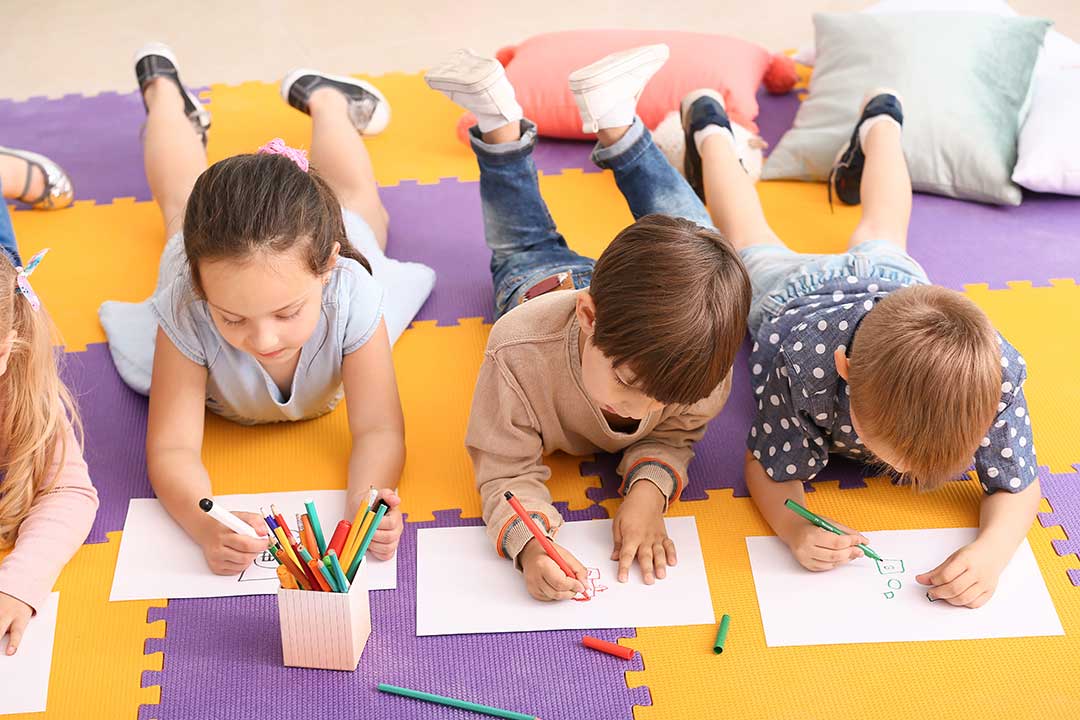
For example, a group discussion can include speaking, pointing, choosing a picture, demonstrating an action, or listening. This allows children with different language abilities and temperaments to participate meaningfully.
Educators can support confidence by:
- Greeting each child consistently
- Preparing children before transitions
- Giving clear, brief directions
- Displaying children’s work respectfully
- Rotating classroom responsibilities
- Providing quiet spaces for children who need a break
- Pairing children for cooperative activities
- Helping children use words for boundaries and requests
- Avoiding public comparisons between children
In a community with changing weather and seasonal indoor time, families may also notice that children have fewer chances to run, explore, or socialize outdoors during some parts of the year. Indoor routines can still support confidence through movement games, pretend play, building materials, music, and household responsibilities.
What if a child is very shy or hesitant?
Reserved behavior is not automatically a problem. Some children need repeated exposure before they feel comfortable in a new group or with an unfamiliar adult. Pressuring a child to perform can increase anxiety and make participation harder.
Adults can prepare the child in advance by explaining what to expect, showing photos or describing the routine, and arriving with enough time for a gradual transition. A child might first watch, then play near others, and eventually join the group.
Avoid labels such as “shy,” “bossy,” or “bad at sharing” in front of the child. Children may begin to treat these descriptions as fixed identities. More useful language describes the current situation: “You like to watch before you join,” or “You are still practicing how to take turns.”
If hesitation is persistent and significantly interferes with communication, play, eating, sleep, attendance, or participation in everyday activities, families can discuss the pattern with the child’s pediatric healthcare provider or another qualified child-development professional.
How do routines at home reinforce confidence?
Children benefit when home expectations are steady and achievable. A predictable morning, meal, bedtime, and cleanup routine gives preschoolers repeated opportunities to practice responsibility.
Adults can reinforce confidence by making time for:
- Unhurried conversation
- Outdoor movement when conditions are appropriate
- Reading and discussing stories
- Pretend play directed by the child
- Simple chores
- Naming feelings without judgment
- Daily opportunities to make a small choice
Confidence grows through connection as much as achievement. A child who feels listened to is more likely to take healthy risks, ask for help, and try again after disappointment. Warm relationships, clear limits, and realistic opportunities for independence provide a strong foundation for preschool development.